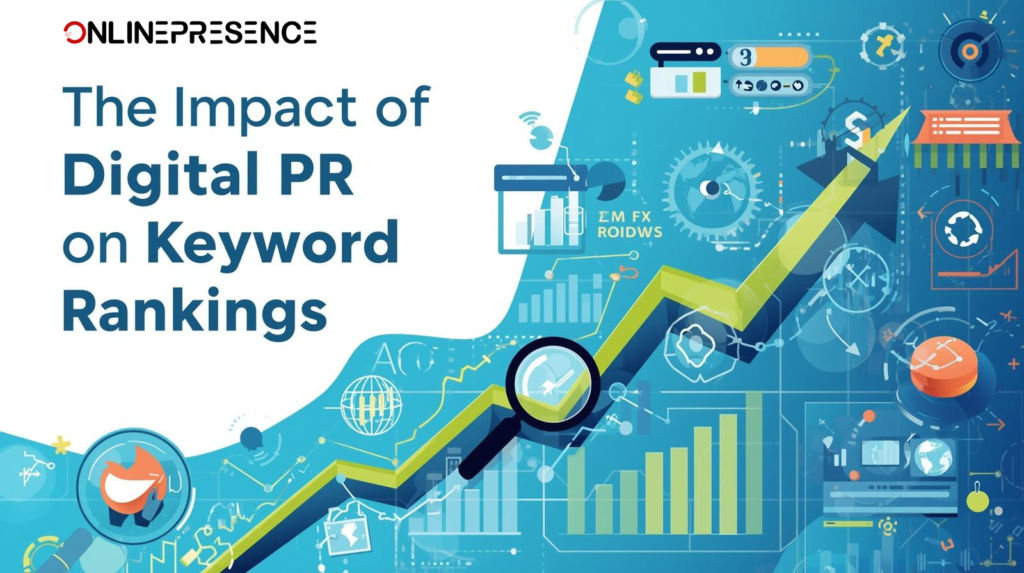
How modern Digital PR drives visibility, authority, and rankings in 2026
If you’ve ever looked at your keyword rankings and thought, “We’re doing everything right… so why aren’t we moving?” you’re not alone.
Many Australian businesses invest in solid content, technical SEO, and backlinks, yet still struggle to break into the top results. Meanwhile, certain brands seem to rank almost effortlessly. They appear everywhere. They get mentioned everywhere. And somehow, they keep winning.
That difference often comes down to something most SEO strategies still treat as optional: Digital PR.
In this article we’ll explore why Digital PR matters for rankings, how it compares to traditional link building, real-world ranking scenarios, and what to measure to see tangible SEO impact, especially in an era where digital priorities are rapidly shifting toward trust, visibility, and authority.
How Keyword Rankings Work in 2026
The old SEO model focused heavily on keywords, density, and a few tactical backlinks. Today’s landscape is different. Search engines no longer assess websites purely as collections of pages. They assess them as brands, entities, and authorities.
Here’s what has changed:
Entity-centric Ranking: Search engines now treat brands more like institutions than simple URLs. Consistent media coverage, third-party mentions, and authoritative references help search engines understand who you are and what you represent. This is one of the core ways the impact of Digital PR on keyword rankings plays out in modern search.
AI-Enhanced Visibility: Tools like Google AI Mode, ChatGPT, and Gemini use editorial trust to surface information. If you’re a service-based business, this shift is even more important, especially with Google’s new AI-driven experiences reshaping visibility. This means your digital priorities can no longer be limited to optimising pages. They must include how your brand appears outside your website.
Brand Trust Above Just Keywords: Keyword placement counts, but who says it and where it occurs is more important. Search engines are increasingly addressing, “Is this brand credible?” Is it mentioned frequently in relevant places?
In short, if your keyword strategy isn’t powered by authority and visibility beyond your own domain, you’re missing a core ranking driver.
The Real Benefits of Digital PR for Rankings
Digital PR isn’t “PR lite,” it’s a strategic driver of SEO results.
It’s a direct contributor to how search engines evaluate relevance, trust, and authority, making the impact of Digital PR on keyword rankings both measurable and strategic.
At its core, Digital PR earns trusted editorial coverage and contextual references that help search engines and AI models understand your brand’s relevance within a topic.
It also reflects a bigger shift in marketing philosophy: Digital PR is a subset of influence marketing where visibility is earned, not manufactured. This shift isn’t limited to searching alone. Social discovery, brand trust, and influence-driven visibility are evolving together.
Here’s what it contributes:
1. Editorial Credibility Links
High-authority placements with meaningful context send higher ranking signals than many standard links. These aren’t random directory links; they’re editor-approved mentions, citations, and links that search engines recognise as genuine.
This is one of the clearest ways digital PR increases trust and credibility in the eyes of algorithms.
2. Brand Mentions and Co-citations
Not every ranking signal needs a clickable link.
When your brand is repeatedly mentioned on reputable websites, without a hyperlink, search engines still register it as a signal of authority.
This is where digital reputation statistics come into play. Modern algorithms analyse:
- How often a brand is mentioned
- Where it’s mentioned
- What topics it’s associated with
- How consistent that messaging is
This reinforces topical relevance and strengthens your entity’s presence.
3. Topical Relevance and Reinforcement of Entities
Repeated editorial coverage teaches algorithms what your brand actually stands for.
If you’re consistently referenced in the context of AI SEO, SaaS, cybersecurity, finance, or ecommerce, you don’t just rank for those topics — you become associated with them.
That’s a huge part of the impact of Digital PR on keyword rankings that many SEO strategies still overlook.
4. AI Visibility and Discovery Signals
AI-driven search engines don’t rank content the same way traditional SERPs do. They select sources.
They rely on trusted references, editorial authority, and brand credibility.
If your brand is consistently referenced by respected outlets, your likelihood of being surfaced by AI assistants increases dramatically, again reinforcing why digital PR increases trust and credibility at a systemic level.
This is also why understanding how brands appear inside AI-driven platforms matters. We’ve broken this down in detail in our guide on how to rank in ChatGPT.
Digital PR vs Traditional Link Building: A Smart Comparison
A common misunderstanding is that digital PR and link building are the same thing. They’re not and confusing the two often leads to short-term gains instead of long-term ranking stability.
While traditional link building focuses on volume, Digital PR focuses on meaning, relevance, and authority. That distinction is exactly why the impact of Digital PR on keyword rankings is stronger and more sustainable.
| Factor | Traditional Link Building | Digital PR |
| Primary Goal | Links | Authority & visibility |
| Risk | Higher (manipulative links) | Lower (editorial fairness) |
| Longevity | Tactical, short-term | Strategic, long-term |
| AI Visibility | Weak | Strong |
| Brand Recognition | None | High |
| Trust Transfer | Limited | Significant |
Traditional link building involves guest posts with templated anchor text. Digital public relations, on the other hand, depends on signal quality and coverage that are important to both humans and algorithms. This leads to a more steady, long-term ranking increase.
And this is exactly where digital PR is a subset of influence marketing. It’s not about manufacturing attention. It’s about earning it.
Real-World Scenarios: How Digital PR Moves Rankings
Digital public relations does more than just “feel good”; it creates measurable shifts in keyword performance. The following are prevalent patterns we’ve seen in modern SEO efforts that use digital PR.
Case 1: Local Australian Service Business.
Situation: A local provider with strong on-page SEO but little authority beyond directories.
Action: Secures features in trustworthy local publications covering industry concerns.
Result: Brand search requests increase, as do rankings for competitive local terms, which frequently go to page one within weeks. This kind of authority-led growth is exactly how modern local SEO works today, especially for service-based businesses trying to generate real leads, not just traffic.
Why does it work: Editorial context from reputable websites shows authority for local search intent.
Case 2: National B2B/SaaS Brand.
Situation: A SaaS brand publishes high-quality, keyword-optimised content but remains outranked by more recognisable competitors.
Action: Publish thought leadership and expert comments in trusted industry publications.
Result: Rankings are stable and improve in key product enquiries, even in competitive SERPs.
Why it works: Search engines don’t just rank content, they rank confidence. Digital PR reinforces topical authority, not just backlink count, further proving the impact of Digital PR on keyword rankings.
Case 3: E-commerce and Consumer Category Growth
Situation: E-commerce store with good technical SEO but poor external presence.
Action: Featured in reputable buying guides, trend reports, and product reviews.
Result: Category keywords increase considerably, as do branded searches.
Why does it work: Trust transfers. When consumers trust a source, algorithms learn to trust it too. This is where digital reputation statistics begin influencing search behaviour at scale.
Why Digital PR Boosts Stability (Not Just Growth)
One of the most significant advantages of Digital PR compared to short-term SEO strategies is ranking consistency. Traditional SEO benefits frequently peak following algorithm adjustments, then fall back. However, when your brand appears in context across reputable sites, search engines are more inclined to hold onto rankings.
This is why digital PR increases trust and credibility in ways that technical fixes never can.
And it’s also why modern digital priorities must include reputation, authority, and external perception, not just internal optimisation.
Why Digital PR Is More Effective in Australia
The Australian internet system lends itself nicely to PR-driven authority:
A smaller national media ecosystem: A few powerful outlets dominate visibility. The coverage here sends out extremely strong trust signals.
Localised search behaviour: Australian audiences rely heavily on brand familiarity and third-party validation. This behavioural pattern reinforces the importance of digital reputation statistics in ranking models.
Competitive local SEO landscape: With many firms effectively optimised on-page, distinction is based on authority rather than content.
In this environment, the impact of Digital PR on keyword rankings is often the difference between page one and page two.
Measures That Prove SEO Impact: What to Track
To justify and develop Digital Public Relations efforts, look beyond vanity metrics:
- Keyword Velocity: The growth of core target phrases over time.
- Ranking Stability: The consistency with which keywords keep places.
- Brand Search Volume: Increase in searches for your brand name.
- Backlink Quality and Referral Traffic: Not just link count, but domain authority.
- AI Citation Presence: The frequency with which your brand appears in AI answer outputs.
These metrics collectively tell a bigger story, not just about traffic, but about digital reputation statistics and long-term trust signals.
Tools like Google Search Console, SEMrush, and Google Analytics can help you measure these signals and accurately assign ranking impact.
Conclusion: Rankings Are a Brand Outcome Now
In 2026, keyword rankings are no longer just the result of page-level optimisation. They’re the outcome of how search engines and AI systems perceive your brand.
This is why the impact of Digital PR on keyword rankings is no longer theoretical; it’s structural.
- Digital PR builds authority.
- Digital PR reinforces relevance.
- Digital PR feeds both traditional and AI-driven discovery.
And most importantly, digital PR increases trust and credibility in a way no isolated SEO tactic can.
For Australian brands competing in saturated search environments, where everyone has great content and solid technical foundations, Digital PR is no longer optional. It’s a ranking strategy, and we at Online Presence can guide you on how to get the impact of Digital PR on your keyword rankings, along with SEO.