In B2B, branding is no longer about catchy taglines or glossy brochures. Today, it is about trust, credibility, and long-term relationships. Decision-makers do not buy on impulse they research, compare, validate, and only then engage with a brand.
That is why social media and content marketing work best as a pair.
Content provides value. Social media ensures that value reaches the right people at the right time.
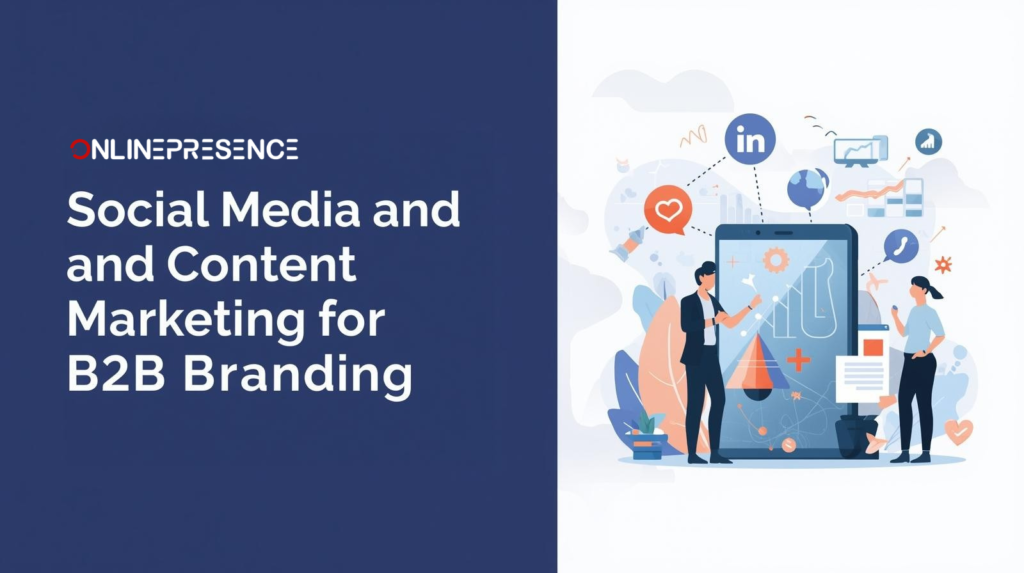
The two together works best for B2B organisations engaging in social media marketing Sydney and content marketing Sydney. When done strategically, it establishes authority, creates quality leads, and positions your company as a helpful expert rather than forceful advertising.
Short Answer: Why This Duo Matters for B2B Branding
B2B branding advantaged by social media and content marketing because they educate customers, establish authority, nurture long sales cycles, and foster trust before sales discussions begin. Content adds depth and credibility, whereas social media guarantees consistent visibility, repetition, and engagement.
Together, they build a system that attracts, nurtures, and converts high-intent buyers.
What Is B2B Content Marketing and Social Media Branding?
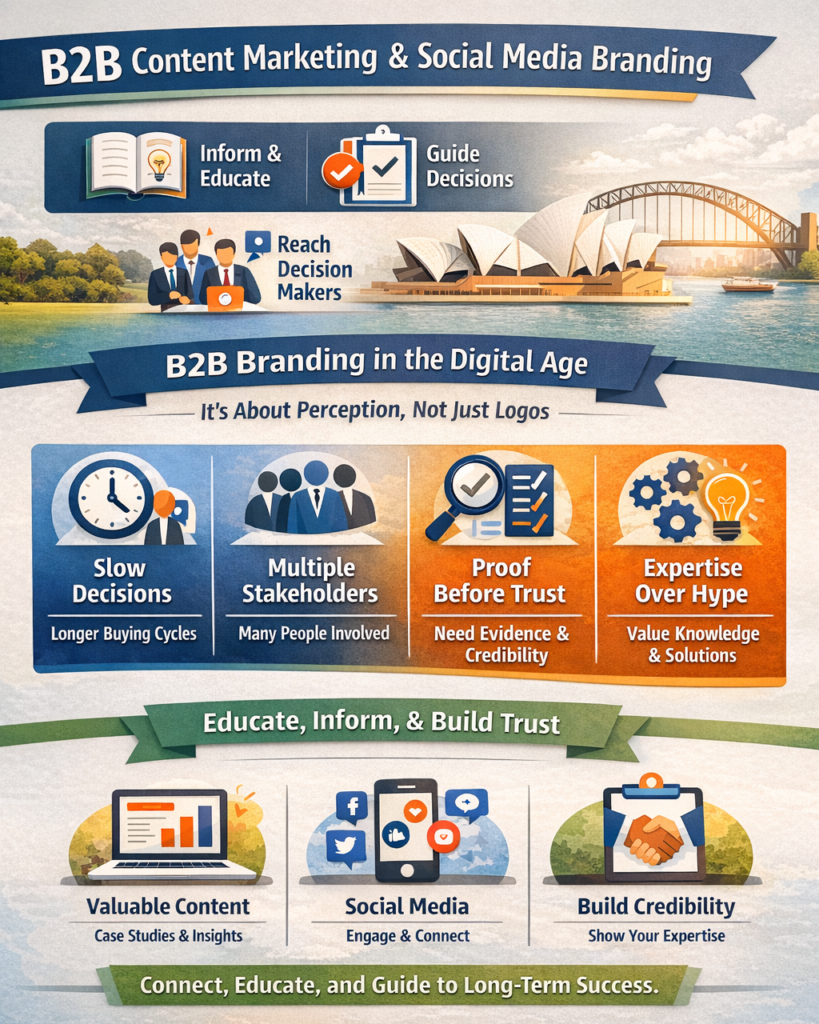
B2B content marketing aims to educate, inform, and guide business buyers through difficult and high-risk decisions.
Social media branding makes this content accessible to the appropriate decision-makers, fosters familiarity, encourages conversations, and strengthens credibility.
When linked, they provide a long-term growth structure rather than a quick lead generation strategy.
What Is B2B Branding in the Digital Age?
Today’s B2B branding is more about perception than logos. It is how your audience perceives your ability, dependability, and clarity across all touchpoints.
Unlike B2C, B2B buyers:
- Take longer to make decisions.
- Involve several stakeholders.
- Demand proof before trust.
- Prefer expertise over entertainment.
They want to know how you solve problems, not just what you sell. That is why modern B2B branding relies largely on content and social media to educate, inform, and guide clients.
Why This Works Psychologically in B2B
B2B buyers are not just making purchasing decisions; they are protecting their reputation, job security, and internal credibility.
This makes them:
- Risk-averse
- Research-driven
- Validation-focused
- Highly sensitive to authority
Content marketing reduces perceived risk by explaining, clarifying, and educating. Social media builds social proof through visibility, repetition, and conversation.
Together, they remove hesitation before a sales call ever happens.
Content Marketing: The Foundation of B2B Trust
Content marketing is the backbone of B2B branding. It gives your brand a voice, a perspective, and a way to demonstrate knowledge before a sales conversation even begins.
What Counts as High-Value B2B Content?
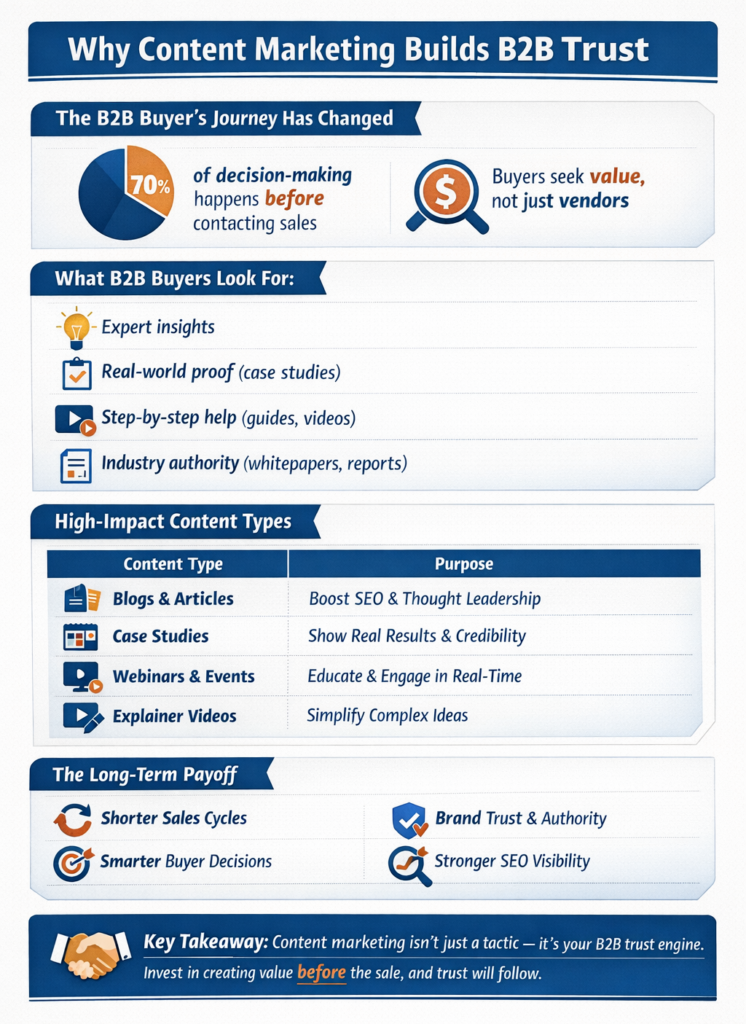
High-performing B2B content includes:
- Blogs and in-depth articles
- Whitepapers and industry reports
- Case studies
- Webinars and workshops
- How-to guides and tutorial
- Explainer videos
This type of content helps your audience make smarter decisions while subtly positioning your brand as the solution.
Why Content Works So Well for B2B
B2B buyers are researchers. They read, watch, and compare before engaging.
Quality content:
- Shortens the sales cycle
- Builds recall and credibility
- Educates prospects
- Removes friction from buying decisions
This is why companies serious about content marketing Sydney focus on long-term authority, not short-term clicks.
Social media: The Distribution Engine for B2B Content
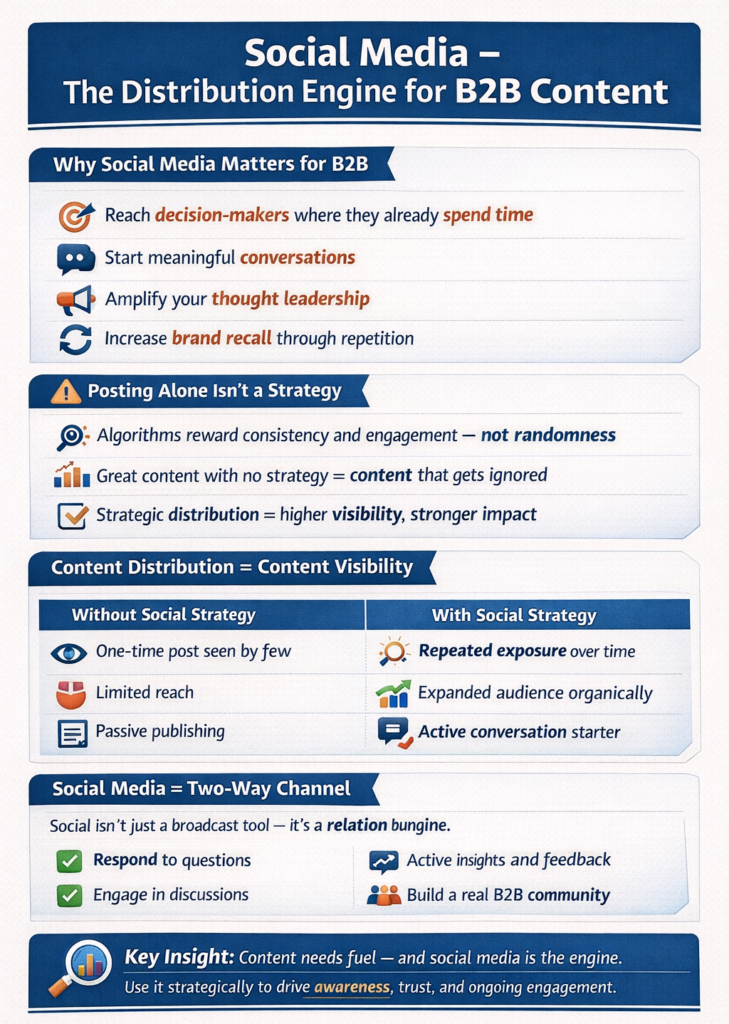
Creating content is only half the job. If no one sees it, it does not matter. That is where social media steps in. Social platforms help your brand:
- Reach decision-makers where they already are
- Start conversations
- Build familiarity
- Amplify thought leadership
Why Posting Alone Is Not Enough
Many B2B brands publish content but fail to distribute it properly. Algorithms do not reward randomness. Without a strategy, even great content gets buried.
Social media ensures that your content gets repeated exposure, increasing recall and trust.
Social Media as a Conversation Channel
Unlike traditional marketing, social media is two-way. It allows you to:
- Respond to questions
- Engage in discussions
- Gather feedback
- Build community
This interaction humanises your brand and builds relationships, something B2B buyers deeply value.
How Social Media and Content Marketing Work Together
Content and social media are not separate strategies; they are complementary. Basically, part of the same system.
Content Is the Core, Social Is the Amplifier
Think of content as the engine and social media as fuel. Content gives you something valuable to say. Social media ensures that the message spreads.
Without Content, Social Posts Feel Empty.
Without Social, Content Remains Invisible.
The B2B Authority Loop (Framework)
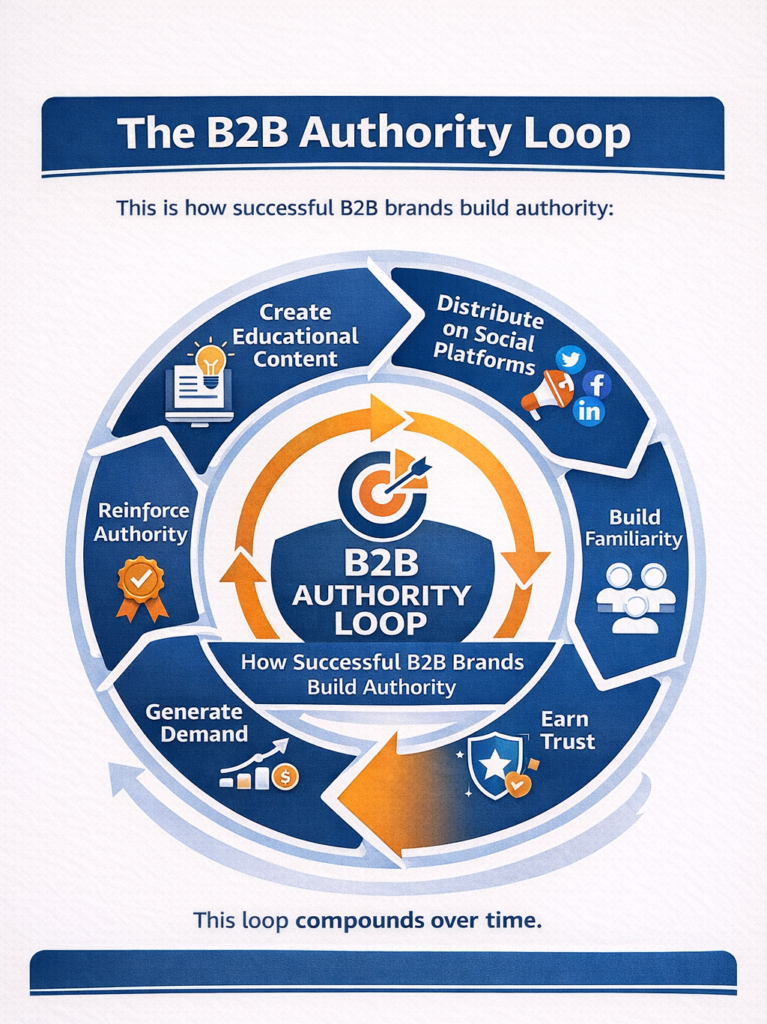
This is how successful B2B brands build authority:
- Create educational content
- Distribute it through social platforms
- Build familiarity
- Earn trust
- Generate demand
- Reinforce authority
This loop compounds over time.
A Typical B2B Content Distribution Flow
A single content asset can be repurposed into multiple formats:
- Blog → LinkedIn post
- Whitepaper → Carousel
- Webinar → Short video clips
- Case study → Story-style post
This system maximises ROI and keeps your brand visible across platforms.
Best Platforms for B2B Content Distribution
Not all platforms serve the same purpose in B2B.
| Platform | Primary Strength |
| Trust, authority, leads | |
| YouTube | Education, discovery |
| Brand familiarity | |
| Retargeting | |
| X (Twitter) | Industry opinions |
Why LinkedIn Is Critical for B2B Branding
If there is one platform that deserves special attention in B2B, it is LinkedIn.
LinkedIn Is Where B2B Decisions Begin
B2B buyers do not just Google solutions; they evaluate brands on LinkedIn. They look at:
- Your company page
- Your leadership team
- Your content
- Your conversations
Before contacting you, they are already forming opinions.
LinkedIn Builds Authority, Not Just Visibility
Unlike other platforms, LinkedIn rewards insight. Thoughtful posts, real-world experience, and honest opinions perform far better than polished ads.
Founder-led branding and expert-led content often outperform company pages.
Traditional B2B Marketing vs Modern B2B Branding
| Traditional | Modern |
| Cold outreach | Inbound trust |
| Sales-first | Education-first |
| Feature-focused | Outcome-focused |
| Short-term | Long-term |
| Ads | Authority |

Real-World Use Cases
- SaaS company: Uses blogs and LinkedIn posts to explain complex tools, reducing onboarding friction.
- Consulting firm: Builds authority through webinars and case studies shared socially.
- IT services provider: Uses explainer videos to simplify technical services.
- Manufacturing brand: Shares behind-the-scenes content to build transparency and trust.
Why Education Beats Hard Selling in B2B
In B2B, selling too early creates resistance. Buyers do not want pressure; they want clarity.
Educational content:
- Reduces hesitation
- Builds confidence
- Positions your brand as a guide
When your content solves problems, selling becomes a natural next step.
Authority Insight from Online Presence
At Online Presence, we have seen B2B brands across Sydney struggle not because they lack expertise, but because they fail to communicate it consistently.
When expertise is paired with structured content and strategic social distribution, brands move from being vendors to becoming reference points in their industry.
This is the real power of combining social media marketing Sydney with content marketing Sydney.
Frequently Asked Questions (FAQs)
Is social media really effective for B2B?
Yes. Decision-makers use platforms like LinkedIn to research vendors long before they contact them.
Which platform is best for B2B branding?
LinkedIn remains the most effective, followed by YouTube for long-form authority.
How long does B2B branding take?
Expect 3–6 months for traction, 6–12 months for authority.
Is content marketing better than paid ads?
They serve different roles. Content builds trust. Paid accelerates reach.
Do small B2B brands need this strategy?
Yes, authority builds faster when competition is low.
Final Thought: B2B Branding Is a Long Game
B2B branding is not built in weeks. It is built through consistency, clarity, and contribution.
When content and social media work together, they do not just generate traffic; they build trust.
And in B2B, trust is the real currency.
For brands investing in social media marketing Sydney and content marketing Sydney, this duo is not just a strategy; it is a growth engine.